
What Follows Death?

This is Article 3 of a Six-Part series on Christian Eschatology: The Immortal Soul, Dualism, Post-Death State, and Eternal Consequences
Article 1: The Immortal Soul
Article 2: Dualism
Article 3: Sleep, not Death
Article 4: The Fate of the Unrighteous
Article 5: The Fate of the Righteous
Article 6: The Culminated Hope
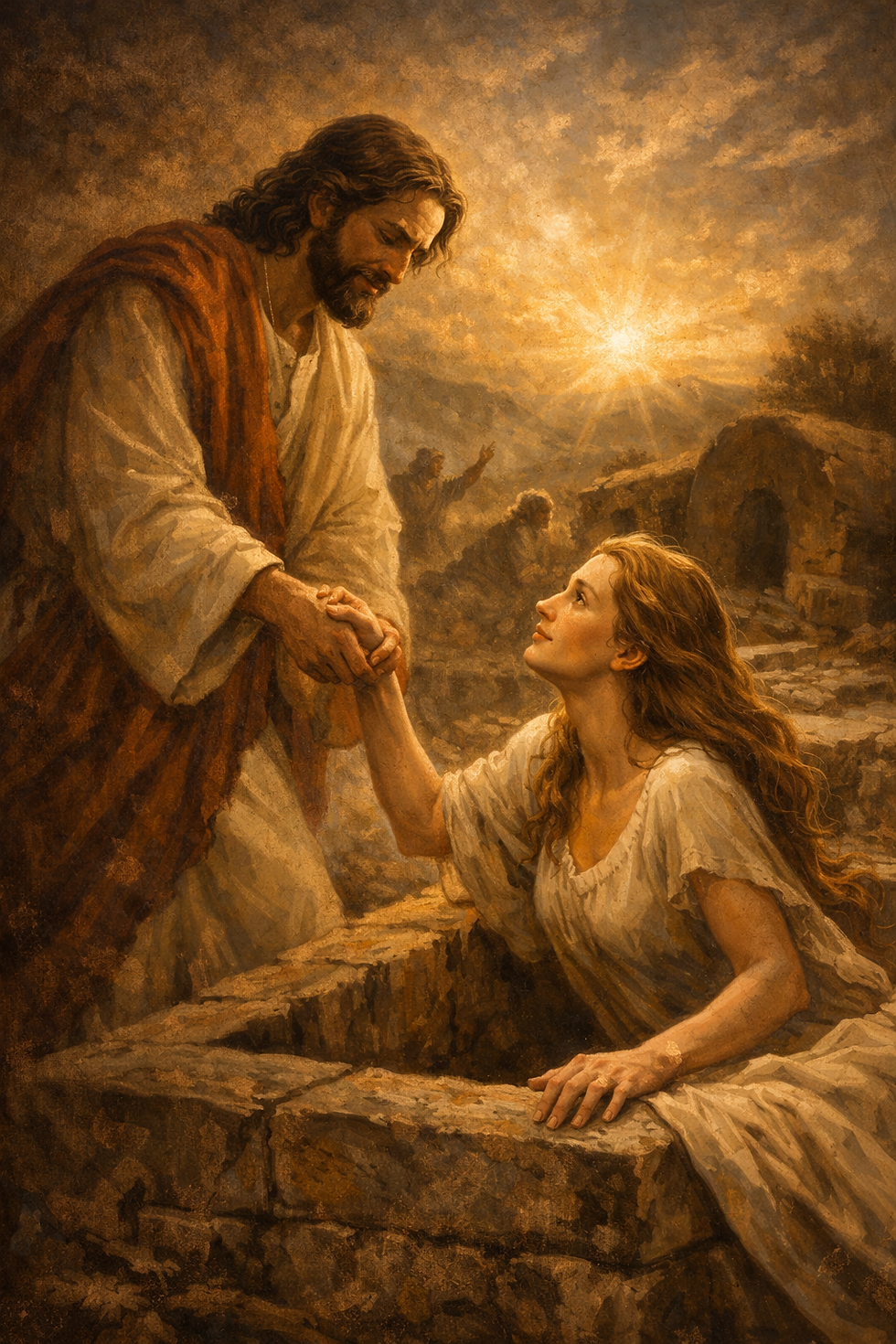
The consequence of death is perhaps the most convoluted and strained subject of Christian theology. Catholics created complex soteriological systems with a multitude of possibilities: Purgatory, Limbo, Heaven, or Hell, all assumed to occur immediately upon death. Protestantism also presupposes immediate Heaven–Hell consequences, or sometimes substitute intermediate locations like Paradise or Abraham’s Bosom, as a kind of waiting room until the second coming of Christ. All of these are errors created by the substitution of Scripture for Greek metaphysics, building and depending entirely on Soul Theory. This term represents the unification of Greek-pagan metaphysics of an immortal human soul and that the body and soul are divisible, separate things. Critical to this understanding is that humans possess an immortal soul that is distinct from our bodies and that continues to exist consciously after the body dies.
Does the Bible Teach Conscious Life After Death?
Every mainstay belief in Christianity about what follows death is wrong. There is no immediate consequence, nor is there a state of consciousness between our death and the Final Judgment. The promise of Christ is not immediate attendance in Heaven or some form of consciousness, but future resurrection at His second coming. This is the New Covenant: that faithful believers, made righteous in Christ, will be resurrected in the final age to inherit the New Heaven and New Earth. What immediately follows death is the same for righteous and unrighteous alike: we sleep, unaware and at peace, waiting for the Lord’s return and the Final Judgment.
No doubt this is startling to believers, seekers, and non-believers alike. Our world is saturated with images of Heaven, of ascension to the angels, to be with God upon our death. When someone passes away, we tell each other, “They are with the Lord in a better place.” This is not inherently wrong; our timeline is simply in error. They will be with the Lord, as will all the faithful, at an unknown point in the future when the Son returns. Until then, our life, our nephesh or psyche, abides in Christ, and we sleep.
On a personal level, I will join you in being shocked. The very idea that everything I have been taught and that I have seen in popular culture is inaccurate is unsettling. It threatens many Christian and even secular presumptions and invites questions that, at first, seem fatal to Christianity as we know it.
I understand how disturbing this experience is. I was raised in evangelical circles and the fear-based message was always the same: if you die and are saved, you go to Heaven; if you die but are not saved, you go to Hell. Both are eternal, conscious circumstances that occur immediately with death. Soul Theory, while not known as such, was accepted as Christian doctrine without a single suggestion of its metaphysical roots.
We already know how Soul Theory infected the church. Theories of immediate consequences necessarily followed a basic question: if the soul is an immortal, conscious essence distinct from the body, what happens to it when the body dies? Here again we see Greco-Roman influence, this time in the form of Hades as a presumed afterlife. Hades became Hell, the foil to Heaven, and was therefore necessarily as horrific as Heaven was perfect. The concepts of Heaven for the righteous and Hell for the unrighteous are further errors we will explore in subsequent articles.

In short, the answer is the same one that explains the most fatal theological errors: the syncretism of Greco-Roman paganism and Greek philosophy into Christian thought very early in the post-apostolic era. As we recall from the first article in this series, the concept of an immortal soul, which binds every eschatological error, is a pagan, Greek concept popularized by Plato and adopted by the church. It is not found in Scripture, was never described by Christ, and was never discussed by His Apostles. But the adoption of this error began a snowball effect where theologians were forced to shape and invent doctrine around pagan metaphysics, disfiguring the pure simplicity of Christian eschatology in the process.
But this entire doctrine possesses no Scriptural foundation. This does not mean that certain verses are not cited as supposed proof, but upon honest exegesis, we find that these verses do not support the errors of Greek metaphysics.
Luke 23:43 and the Comma That Changed Doctrine
Chief among these supposed prooftexts are the words of our Lord Jesus Christ given to the thief on the cross in Luke 23:43: “Truly I tell you, today you will be with me in paradise.” This text, on its face, seems to support the idea of post-death consciousness. However, the initial error occurs in the translation. Greek does not use punctuation, and it has become apparent that the confusion stems from a single, simple comma placement. Consider that same text with just a slight modification: “Truly I tell you today, you will be with me in paradise.”
In this grammatical context, the adverb “today” may belong with “I say to you” since ancient Greek lacks punctuation. This reading has patristic support (notably in Syriac tradition) and aligns with Luke’s Hebraic idiom: “I tell you today…” which is a common Semitic formula. Consider a similar, invented example in English: “Let’s eat grandma!” vs “Let’s eat, grandma!” While a bit trite, it is nonetheless germane since grammar, syntax, and individual word meaning can either confuse or clarify the meaning of Scripture. Jesus Himself teaches us to interpret Scripture based on its very grammar (see His debate with the Sadducees in Matthew 22:31–32). This level of exegesis is one that follows His example.
But the present interpretation is not challenged by grammar alone. The term “Paradise” (Greek: παράδεισος) in Judaism is used to refer to the Garden of God, the restored Eden, and His future Kingdom, but never a disembodied intermediate state. It is used this way in Genesis 2 (LXX/Septuagint), 2 Corinthians 12:2–4 (Paul equates Paradise with the “third heaven”), and Revelation 2:7 (tree of life—eschatological). Paradise is the Kingdom of God, not Heaven, which is understood as the dwelling place of God and His angels.
The most edifying aspect of this particular verse is not in what it does not say, but in the fact that Jesus Himself did not go to Paradise that day. After His resurrection, He tells Mary: “I have not yet ascended to my Father” (John 20:17). If Christ did not ascend, the thief could not have been with Him in Paradise that day. When we examine the thief’s request, it is an eschatological one without any assumption of immediate result—“Remember me when You come in Your kingdom”—that is, at the resurrection that follows Jesus’ return at the Final Judgment. We can see that the very words of Christ correct our own translation error, since He could not have promised actual ascension to Paradise—that is, the New Kingdom—on that day, since Christ Himself did not ascend.
Viewed holistically and with careful exegesis, it becomes plain that Luke 23:43 does not teach conscious, immortal-soul, post-death life. Instead, it aligns with the broader promise of the New Covenant: eternal life following resurrection when Christ returns.
Paul on Death, Sleep, and Resurrection
Philippians 1:23 is another text that is often interpreted as implying an immediate, conscious existence after death. In this passage, the Apostle Paul discusses life or death: “I am hard pressed between the two. My desire is to depart and be with Christ, for that is far better.” This text is often used by Protestants and occasionally by Catholics to argue for immediate, conscious afterlife. They say that this passage shows that Paul expects immediate presence with Christ upon death. However, Paul’s anthropology is explicitly resurrection-centered. In Thessalonians 4:16–17, He says:
For the Lord himself will descend from heaven with a cry of command, with the voice of an archangel, and with the sound of the trumpet of God. And the dead in Christ will rise first. [17] Then we who are alive, who are left, will be caught up together with them in the clouds to meet the Lord in the air, and so we will always be with the Lord.
Here Paul is describing the events following the second coming of Jesus Christ. We see first the descent of Christ from Heaven, followed by the resurrection of the dead, and finally the ascension of the righteous to be with the Lord. The principal paraphrase, that of “rising to be with the Lord” does not follow our earthly death. In death, we sleep. Instead, we join our Lord following our miraculous resurrection at the culmination of all things.
Paul repeatedly emphasizes resurrection as the goal of the Christian life, not immediate ascension or interim consciousness. He writes in Philippians, “So we strive… that we may attain to the resurrection” (3:11), and also describes immortality as something we put on at resurrection, not before (1 Cor. 15:53). Nowhere in his teaching does Paul define the timing other than placing it post-resurrection. He never uses any language that implies immediate consciousness, ascension, or immortality. He simply says that the outcome of departure—death—is being with Christ, which within the context of his entire apostolic teaching, we can plainly see that being with Christ occurs after the resurrection. This is further reinforced by his repeated description of death as sleep (1 Thess. 4:13–15; 1 Cor. 11:30; 15:6, 18, 51). Paul’s Jewish worldview sees consciousness resumed at resurrection without any concept of consciousness in death. His words in Philippians express hope in the final age and cannot be understood as a chronological revelation. His entire ministry, assigned to him by Christ, does not support conscious existence prior to resurrection.
We see similar exegetical meaning in 2 Corinthians 5:6–8 where Paul teaches: “…We know that while we are at home in the body we are away from the Lord, 7 for we walk by faith, not by sight. 8 Yes, we are of good courage, and we would rather be away from the body and at home with the Lord.” Traditional interpretation takes the final verse to mean that leaving the body (dying) means we are immediately with Christ. But again, Paul defines being “home with the Lord” as resurrection life (2 Cor. 5:1–4). The entire context is about being clothed with immortality following the resurrection. There is no chronological specificity necessary since time does not exist for the sleeping dead.
Nowhere in Paul’s ministry does he describe disembodied, conscious existence. In fact, Paul elsewhere dislikes the concept of disembodiment. Earlier in that same letter he writes, “We do not wish to be unclothed, but to be clothed” (5:4). In this context, “unclothed” means to be in a disembodied state (Greek: γυμνοί). Paul wants the opposite—the resurrection body. Here Paul compares our present life of faith with the resurrection life of vision, beholding God in His glory. Again, there is no intermediate state. 2 Cor. 5:1–10 teaches resurrection hope, not immortal-soul existence or intermediate consciousness.
We also have Revelation 6:9–11. It is worth noting that Revelation is the most contested book in the original canon, one that was disputed in the early church and was rather reluctantly added to the canon later than the de facto canon of the church. Historical background aside, in this passage we see a description of “souls under the altar” of Heaven, the souls of martyrs. Traditional interpretations insist this shows conscious existence in Heaven. Of course, the biggest issue, aside from the disputed nature of Revelation itself, is that it is a book written as symbolic, apocalyptic literature. It is not a literal narrative, nor is it liturgical instruction. Instead, it belongs to the broad, rich group of writings that exemplify the entire apocalyptic genre. Everything in the chapter is symbolic: horses, scales, cosmic signs, seals, earthquakes, and more. Thus the “souls under the altar” represent martyrs crying for justice (cf. Gen. 4:10—Abel’s blood “crying out” from the ground). The imagery is drawn directly from Leviticus 4, where sacrificial blood is poured under the altar. These souls clearly do not yet have resurrection bodies, which aligns with symbolic depiction rather than metaphysical teaching. This passage is like every other verse in Revelation: apocalyptic, visionary, and symbolic. It is not prescriptive, and it certainly does not represent doctrinal anthropology.
Hebrews 12:23 is also misunderstood. We read of the “spirits of righteous men made perfect,” sometimes used to support conscious heavenly souls. The problem, however, is that the entire context is that of a liturgical vision, not a metaphysical revelation. Hebrews depicts realities that believers approach in worship; “spirits made perfect” are those believers perfected through Christ’s sacrifice (Heb. 10:14), not disembodied souls in heaven. There simply is no ontological guidance, nor any evidence of conscious life pre-resurrection.
Of all the Scriptural texts that seem to support interim consciousness, there is one that stands out for its revelatory vision: the Transfiguration (Matthew 17:1–8, Mark 9:2–13, Luke 9:28–36). In these amazing passages, a vision is described where Moses and Elijah appear with Christ atop Mount Tabor. With Moses and Elijah thus described, it then appears obvious that some form of conscious state must exist prior to the resurrection.
We know that Moses died, though Elijah was assumed bodily into Heaven (2 Kings 2:11). This text does not teach their metaphysical state, but rather disputes assumptions of Soul Theory. One must also recall that this is a vision (Matt. 17:9), just like Stephen’s vision (Acts 7:55–56). In it, we see the fulfilment of the Prophets (Elijah) and the Law (Moses) in Jesus Christ. It is a revelatory vision of Jesus’ completeness, of His role as the consummation of prophecy and law into His singular example. This vision is not evidence of disembodied conscious existence. If we accept it as a literal description instead of a vision, we can just as easily recognize the figures as possessing glorified bodies.
Paul’s reference to being “caught up to the third heaven” in 2 Corinthians 12:2–4 is often cited as evidence for immediate post-death consciousness, yet the passage itself resists such use. Paul deliberately refuses to define the experience in terms of body–soul separation, stating that he does not know whether it occurred “in the body or out of the body,” thereby placing clear limits on speculation. His language reflects Jewish cosmology, not Greek dualism, with the “third heaven” denoting God’s dwelling and “Paradise” carrying Edenic, restorative meaning rather than a metaphysical soul-realm. Significantly, Paul does not present the experience as normative, doctrinal, or representative of the believer’s fate after death, and he immediately downplays it in favor of emphasizing weakness, suffering, and reliance on God’s grace. Far from supporting an immediate Heaven–Hell framework, this passage functions as a guarded, exceptional vision that coheres with Paul’s consistent teaching elsewhere: the dead are described as sleeping, hope is fixed on resurrection, and salvation culminates in the renewal of creation at Christ’s return.
Why Greek Philosophy Distorted Christian Eschatology
Many Christians view these passages through the lens of Platonic metaphysics, necessarily distorting their view. Because of this foundational error, these passages may appear to support post-death immediacy, but when we peel the pagan lens away and let Scripture breathe, we can see just the opposite. Each of these texts, when read in context, fails to teach what later traditions assume. Luke 23:43 hinges on punctuation absent in Greek and uses “Paradise” in its eschatological sense; Philippians 1:23 and 2 Corinthians 5:1–10 anchor “being with Christ” in resurrection, not interim consciousness; Revelation 6 uses symbolic, sacrificial imagery, not metaphysics; Hebrews 12 depicts liturgical reality, not disembodied souls; and the Transfiguration is a visionary revelation of Christ’s fulfillment of Law and Prophets rather than a window into post-mortem human consciousness. Paul’s “third heaven” used Jewish terminology to describe the realm of God in a singular, exceptional description. When we interpret these passages with careful exegesis and without a Platonic lens, they instead reinforce the consistent Biblical pattern: death is sleep, resurrection is the hope, and Scripture never teaches an immortal, conscious soul waiting in heaven prior to the last day.
Though modern Christian doctrine is incorrect, this does not mean that Scripture leaves us ignorant and afraid of death. So what actually happens when we cast off our physical bodies? As Scripture teaches us, the dead sleep (Greek: koimēthēnai). This is the dominant term used throughout Scripture, including:
Daniel 12:2—“And many of those who sleep in the dust of the earth shall awake, some to everlasting life, and some to shame and everlasting contempt.”
John 11:11–14—“After saying these things, he said to them, ‘Our friend Lazarus has fallen asleep, but I go to awaken him.’ 12 The disciples said to him, ‘Lord, if he has fallen asleep, he will recover.’ 13 Now Jesus had spoken of his death, but they thought that he meant taking rest in sleep. 14 Then Jesus told them plainly, ‘Lazarus has died,’
Acts 7:60, as Stephen, the first martyr, was killed: “And falling to his knees he cried out with a loud voice, ‘Lord, do not hold this sin against them.’ And when he had said this, he fell asleep.”
1 Thess. 4:13–15—“But we do not want you to be uninformed, brothers, about those who are asleep, that you may not grieve as others do who have no hope. 14 For since we believe that Jesus died and rose again, even so, through Jesus, God will bring with him those who have fallen asleep. 15 For this we declare to you by a word from the Lord, that we who are alive, who are left until the coming of the Lord, will not precede those who have fallen asleep.”
1 Cor. 15:6, 18, 51—“Then he appeared to more than five hundred brothers at one time, most of whom are still alive, though some have fallen asleep… 18 Then those also who have fallen asleep in Christ have perished…51 Behold! I tell you a mystery. We shall not all sleep, but we shall all be changed,”
Matthew 27:52—“The tombs also were opened. And many bodies of the saints who had fallen asleep were raised,”
There is no consciousness, awareness, activity, or even praise while we sleep (Eccl. 9:5; Ps. 146:4; Ps. 115:17). Our “life” is hidden with Christ in God (Col. 3:3), a covenantal union, but not a conscious experience. The dead, those who sleep, rest (Rev. 14:13) and know nothing of the world (Eccl. 9:5). It is a period of complete inactivity, rest, absence of awareness, waiting for the resurrection. All who sleep will rise again when Christ returns, the righteous to their fate, and the unrighteous to their own.

There is no Biblical contradiction between death, or “sleep,” and the promise of Christ through the New Covenant. In fact, understanding the lack of immediate, post-death consciousness is the only eschatological view that aligns with the entire message of Scripture. For disciples of Jesus Christ, hope is always grounded in resurrection, not in Greco-Roman concepts of disembodied existence. The pattern is consistent: we are raised on the last day (John 6:40, 44, 54), and believers meet the Lord after resurrection (1 Thess. 4:16–17). We long for the “Heavenly body” (2 Cor. 5), life is given through bodily resurrection (Romans 8:11), and everything depends on attaining “the resurrection of the dead” (Philippians 3:11). Our earlier exegetical analysis only clarifies and reinforces the truth: the faithful sleep, comforted, knowing that we will rise again, don immortal forms given us by God, and ascend to meet with our Lord and Savior, Jesus Christ, on the final day.
The Greek Infection in Modern Christianity
With such a clear Scriptural record, it is worth exploring why so many Christians believe invented, pagan eschatology. The answer was alluded to in the beginning: the baptism of Greek metaphysics into Christian theology. Augustine and others made the soul immortal, breeding an ongoing, accumulating doctrinal error assuming that death catalyzed immediate consequences with conscious existence. Medieval theology invented Purgatory, Limbo, and an entire soteriological system based on the assumption that souls existed in Heaven near to God to do the will of men and dispense grace. Ironically, the same church that hunted and persecuted Gnostic Christians—using secular, imperial force—internalized many of the same concepts they deemed heretical at the time, including the immortality of the soul.
Protestantism did not break free of this seminal error, but merely pruned a few branches. In effect, Protestants inherited the same anthropology. Modern Christians do not know Jewish eschatology, which forms the central foundation of Christ’s salvific message. Most modern churches—Catholic, Protestant, Orthodox, evangelical, Pentecostal—have inherited 1,800 years of Platonic anthropology. To the downfall of all Christian doctrine, those trusted with guiding others simple repeat tradition, not exegesis, resulting in an endless, cyclical error that, over such a protracted period of time, has gained a veneer of truth. Plato taught that souls are immortal, live on after death, and are conscious without bodies. The Church absorbed this in the first centuries and continues to repeat it with the weight of Scriptural truth.
Our task, then, is not to defend the fruit that has fallen from the poisonous tree of Platonic metaphysics, but to proclaim what the New Testament proclaims: “Christ has been raised from the dead, the firstfruits of those who have fallen asleep” (1 Corinthians 15:20).
Our hope is resurrection. Any faithful witness must conform to the Scripture, completed and delivered, and not on the malleable traditions of men. When we adhere to Scriptural fidelity, we see that there is no immediate consequence to death. The righteous and unrighteous sleep, awaiting the return of Christ when He will resurrect all and then separate them based on their covenantal union with Him.
If we accept what Scripture tells us and likewise believe the words of Christ, we understand that Christian doctrine leads to sleep in death, not to Soul Theory or immediate consequence. All consequences, for both the righteous and unrighteous, await the return of Christ and His judgment. So what happens then? That is what we will examine in Article 4: The Fate of the Unrighteous.

Keywords/phrases: post-death consciousness in Christianity does the Bible teach soul sleep Christian view of death and resurrection immortal soul vs resurrection biblical teaching on death is there an intermediate state after death sleep of the dead Bible resurrection vs heaven after death Greek philosophy influence on Christianity Platonic dualism in Christian theology
does the Bible teach immediate heaven or hell Luke 23:43 comma debate explained Paul on death and resurrection Philippians 1:23 explained 2 Corinthians 5 resurrection not heaven Revelation 6 souls under altar meaning Jewish eschatology vs Christian tradition biblical anthropology body and soul origin of immortal soul doctrine Christian eschatology resurrection not heaven


Comments